
Waist to Hip Ratio Calculator
Enter your waist and hip measurements to find your waist to hip ratio (WHR) and your WHO risk band.
Your waist to hip ratio
What Is Your Waist to Hip Ratio?
Our free waist to hip ratio calculator gives you an instant answer: divide your waist measurement by your hip measurement, and you get your waist to hip ratio (WHR), a simple number that shows how fat is distributed around your body. Health experts use it alongside other measures to estimate health risk.
Unlike body weight alone, WHR tells you where your body stores fat. Fat carried around the waist, often called abdominal fat, is linked to a higher risk of heart disease, type 2 diabetes, and other health problems than fat carried around the hips and thighs. That is why doctors and fitness coaches often check WHR in addition to weight and body mass index.
How to Use the Waist to Hip Ratio Calculator
Accurate measurements matter, because even a small error changes your result. Use a soft measuring tape, stand relaxed, and measure over bare skin or light clothing. Follow these steps:
- Stand upright with your feet together and breathe out normally. Do not hold your stomach in.
- Find your waist at its narrowest point, usually just above your belly button and below your rib cage. Wrap the tape around it, keeping the tape level and snug but not tight.
- Find your hips at their widest point, usually around the fullest part of your buttocks. Wrap the tape around them, keeping it level.
- Write down both numbers in the same unit, either centimeters or inches, and enter them in the calculator above.
- Repeat each measurement twice and use the average if the two readings differ.
Measure in the morning before eating for the most consistent results, and use the same tape and technique each time you recheck.
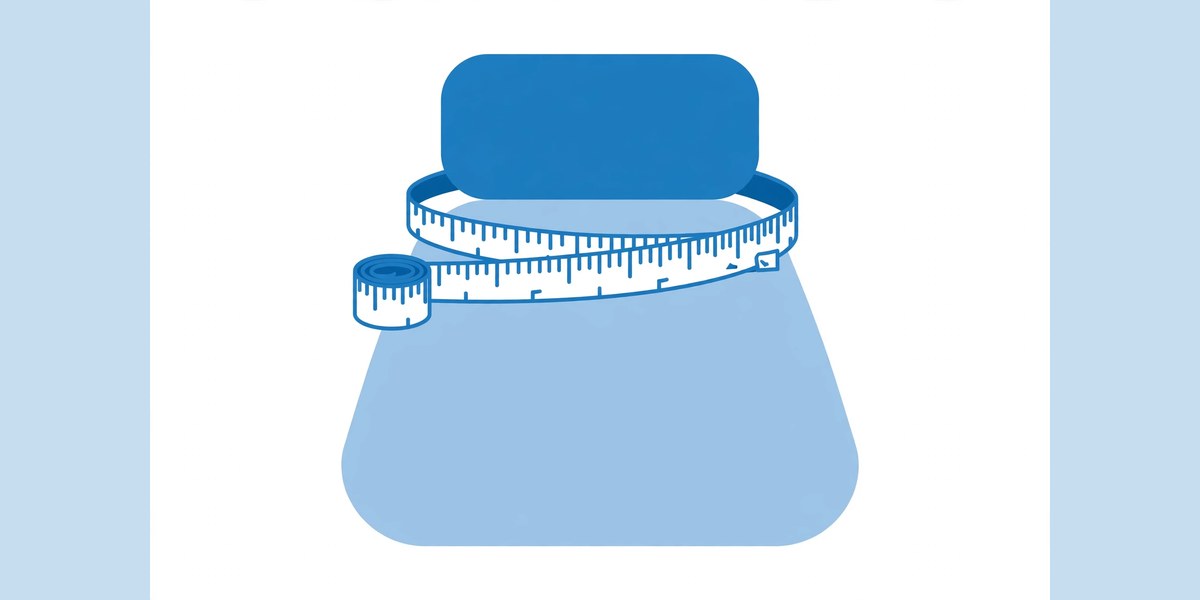
WHO Waist to Hip Ratio Risk Bands
The World Health Organization (WHO) sets different healthy ranges for men and women, because men and women naturally store fat differently. The table below shows the bands used by this calculator.
| Risk band | Men | Women |
|---|---|---|
| Low risk | Below 0.90 | Below 0.80 |
| Moderate risk | 0.90 to 0.99 | 0.80 to 0.85 |
| High risk | 1.00 and above | 0.86 and above |
A result in the moderate or high band does not diagnose a disease. It is a screening signal that suggests you may benefit from healthier eating, more movement, and a conversation with a healthcare professional.
Waist to Hip Ratio Calculator: Worked Examples
The table below shows verified examples so you can check how the calculation works before you try your own numbers.
| Person | Waist | Hip | Calculation | WHR | Risk band |
|---|---|---|---|---|---|
| Man | 85 cm | 95 cm | 85 / 95 | 0.89 | Low risk |
| Woman | 80 cm | 95 cm | 80 / 95 | 0.84 | Moderate risk |
| Woman | 28 in | 36 in | 28 / 36 | 0.78 | Low risk |
| Man | 102 cm | 100 cm | 102 / 100 | 1.02 | High risk |
Notice that the same waist size can land in a different band depending on gender and hip size, which is why both measurements and your gender matter.
Waist to Hip Ratio vs. Other Health Measures
WHR works best as part of a broader picture. A body fat percentage calculator estimates how much of your weight is fat versus lean tissue, while WHR focuses on where that fat sits. The two tools answer different questions, and using both gives a fuller view of body composition.
Body mass index is another common check, but it cannot tell muscle from fat. An athlete with a lot of muscle can have a high BMI yet a healthy WHR, so pairing the two readings avoids misleading conclusions. A waist to height ratio calculator offers yet another angle, comparing your waist to your height instead of your hips, and some researchers consider it an even simpler screening tool.
If your WHR falls in a higher band, the fix is usually the same advice that supports general health: regular aerobic exercise, strength training, enough sleep, and a diet rich in vegetables, lean protein, and whole grains. A BMI calculator can help you track weight trends while you work on those habits, and rechecking your WHR every few months shows whether your fat distribution is improving even when the scale moves slowly.
Frequently Asked Questions
What is a good waist to hip ratio?
For men, a WHR below 0.90 is considered low risk by the WHO, and for women, a WHR below 0.80 is low risk. Results at or above 1.00 for men and 0.86 for women fall in the high-risk band.
How do I calculate my waist to hip ratio?
Measure your waist at its narrowest point and your hips at their widest point, using the same unit for both. Then divide the waist number by the hip number. For example, a waist of 85 cm divided by hips of 95 cm gives 0.89.
Is waist to hip ratio better than BMI?
Neither measure is perfect, and they work best together. BMI reflects total weight relative to height, while WHR reflects fat distribution. WHR can flag abdominal fat risk in people whose BMI looks normal, and BMI can add context when WHR alone is unclear.
Should I use centimeters or inches?
Either unit works, as long as you use the same unit for both measurements. The ratio is unit-free, so 85 cm divided by 95 cm gives the same result as the equivalent values in inches.
How often should I check my waist to hip ratio?
Checking once a month is enough for most people. Fat distribution changes slowly, so weekly checks mostly show measurement noise. Measure at the same time of day and with the same technique each time.
Can I reduce my waist to hip ratio?
Yes, in many cases. Reducing abdominal fat through regular exercise, a calorie-aware diet, less alcohol, and better sleep tends to lower waist size while hip size changes less, which brings the ratio down. Talk with a healthcare professional before starting a new diet or exercise plan.
Learn More
Keep exploring your health numbers with these related calculators: