Quick answer: Biweekly mortgage payments split your monthly payment in half and charge that half every two weeks. Because a year has 26 two-week periods, you make 26 half-payments, which equals 13 full monthly payments instead of 12. The extra payment goes straight to principal, cutting years off the loan and reducing total interest.
What Is a Biweekly Mortgage Payment?
A biweekly mortgage payment is one-half of your regular monthly mortgage payment, paid every two weeks instead of once a month. The term causes confusion because some lenders use it loosely, so the definition matters.
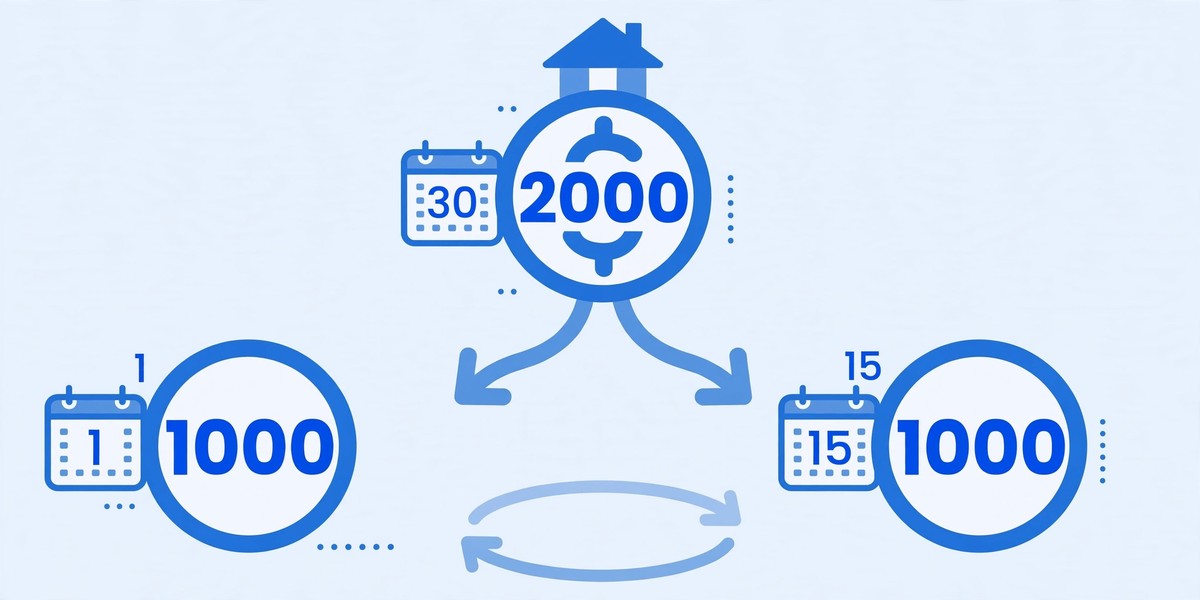
A true biweekly plan means 26 payments per year. A semi-monthly plan, which bills you twice per calendar month, means only 24 payments and provides no savings advantage at all.
If you pay $2,000 a month, a true biweekly plan bills you $1,000 every two weeks. A semi-monthly plan bills you $1,000 on the 1st and the 15th. Only the biweekly version creates the extra payment that accelerates your payoff.
How Does the 26-Payment Schedule Work?
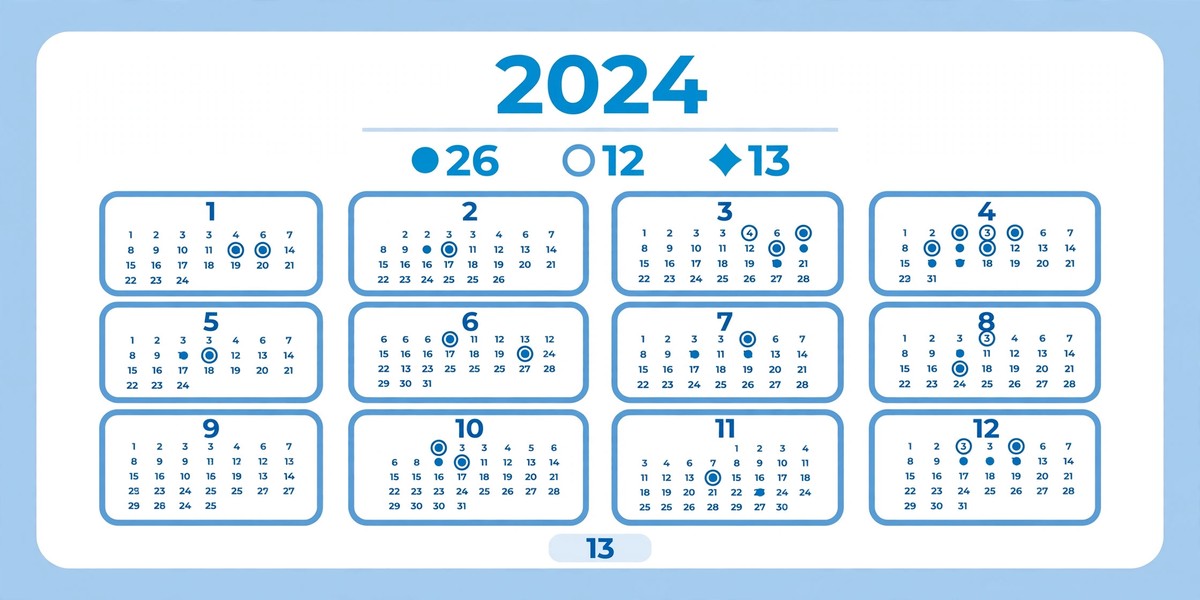
There are 52 weeks in a year, which gives 26 two-week periods. When you pay half your mortgage every two weeks, you make 26 half-payments over the year. Two half-payments equal one full monthly payment, so 26 half-payments equal 13 full monthly payments.
Standard monthly billing collects only 12 payments per year. The biweekly schedule therefore squeezes in one extra full payment every year without raising your monthly budget in any painful way. Two months of each year contain three biweekly payments instead of two, and those third payments are what build the extra annual payment.
This is the entire trick. You are not paying double. You are paying about 8% more per year on average, spread so thinly across 26 payments that most household budgets barely notice it.
Where Does the Extra Payment Go?
Every mortgage payment covers interest first, then principal. The extra annual payment created by the biweekly schedule goes almost entirely toward principal, because the interest due for the period is already covered by the two scheduled half-payments.
Reducing principal has a compounding effect. Less principal means less interest accrues in the next period, which means more of each future payment goes to principal. This snowball is why a single extra payment per year cuts several years off a 30-year loan.
A worked example makes this concrete. Take a $300,000, 30-year mortgage at 7% interest, a typical 2026 rate:
- Standard monthly payment: $1,995.91
- Biweekly payment: $997.95, paid every two weeks
- Payments per year: 26, equal to 13 monthly payments
- Payments to payoff: 617, or about 23.7 years
- Total interest, monthly plan: about $418,500
- Total interest, biweekly plan: about $315,100
- Interest saved: about $103,000
The borrower pays about $166 more per month on average but finishes the loan more than six years early and keeps over $100,000 that would otherwise have gone to interest. Want the exact figures for your own loan? Use our biweekly mortgage calculator to see your own numbers.
How Each Payment Is Applied, Step by Step
- You pay half your monthly amount. In the $300,000 example, that is $997.95 every two weeks.
- Interest is charged on the current balance. At 7% annual interest, each two-week period accrues interest at the biweekly rate, roughly $808 on the starting balance of $300,000.
- The rest reduces principal. After interest is covered, the remainder of your $997.95 lowers the balance, so the next period accrues slightly less interest.
- The cycle repeats 26 times. In months with three payments, the third payment lands mostly on principal because the first two half-payments already covered that month’s interest.
- The loan amortizes faster. With principal falling faster each cycle, the payoff date moves from 30 years to about 24 years in this example.
Biweekly Through Your Lender vs Doing It Yourself
Two versions of biweekly payments exist, and they are not equal.
Lender-run biweekly plans are set up by your mortgage servicer. The servicer collects half-payments every two weeks and applies them to your loan. Some servicers charge a setup fee or a small per-payment fee for this service, and a few hold your first half-payment until the second arrives before crediting your account, which delays the benefit slightly.
Do-it-yourself biweekly means you add one-twelfth of your monthly payment to each monthly payment. On the $300,000 example, you add $166.33 to the $1,995.91 payment, for $2,162.24 per month. Verified math shows this pays off the loan in 285 payments (23.75 years) with about $316,100 in total interest, nearly identical to a true biweekly plan, with no fees and no enrollment.
Before enrolling in a lender plan, ask three questions: Is there a fee? When are partial payments applied to my balance? Can I cancel anytime? If the answers are unsatisfying, the DIY method gives you the same math for free.
Common Misunderstandings About Biweekly Payments
“Biweekly just splits my payment, so it cannot save money.” Splitting alone saves nothing. The savings come from making 26 half-payments, which totals one extra payment per year. A semi-monthly plan of 24 half-payments saves nothing extra.
“It doubles my housing cost in some months.” It does not. Your average monthly outflow rises by only one-twelfth of a payment, about 8%, and the loan is gone years sooner.
“I need my lender’s permission.” For the DIY method, you do not. Just confirm your servicer applies extra amounts to principal rather than treating them as an early payment of next month’s bill. Most servicers apply extra principal automatically when you pay more than the amount due, but a quick call removes all doubt.
“It only works for new mortgages.” Wrong. You can switch to biweekly-style extra payments at any point in the life of the loan. Starting in year five of a 30-year loan still saves tens of thousands of dollars, because the extra principal attacks the balance during the years when interest would otherwise dominate.
Frequently Asked Questions
How many biweekly mortgage payments are there in a year?
There are 26 biweekly payments in a year, which equals 13 full monthly payments. Two months of the year will have three biweekly payments instead of two.
Do biweekly mortgage payments really save money?
Yes. On a $300,000, 30-year loan at 7%, verified math shows biweekly payments save about $103,000 in interest and cut the payoff to about 24 years, compared with about $418,500 in interest over the full 30 years on a monthly schedule.
Is biweekly the same as paying my mortgage twice a month?
No. Paying twice a month on fixed calendar dates is semi-monthly: 24 half-payments per year, which equals 12 full payments and creates no extra payment. True biweekly means every two weeks, 26 payments, 13 full equivalents.
Can I set up biweekly payments myself without my lender?
Yes. Add one-twelfth of your monthly payment to each monthly payment and confirm the extra goes to principal. This DIY approach produces nearly the same payoff time and savings as a formal biweekly plan, with no enrollment or fees.
Do biweekly payments help my credit score?
Paying as agreed keeps your payment history clean, which supports your score. Biweekly payments do not give a special scoring bonus, but the faster-shrinking balance steadily improves your loan-to-value position over time.
When should I avoid a lender-run biweekly plan?
Avoid it when the servicer charges a setup fee or per-payment fee that eats into your savings, or when it holds partial payments instead of applying them promptly. In those cases, the free DIY method is the better choice.