To calculate your macros, find your BMR with the Mifflin-St Jeor equation, multiply by an activity factor to get your TDEE, adjust for your goal (minus 500 to lose, plus 300 to gain), then split your calories by your macro percentages using 4 calories per gram for protein and carbs, 9 for fat. The result is your daily gram targets.
Counting calories tells you how much to eat. Calculating your macros tells you what to eat. The difference matters: two people can eat 2,000 calories a day and look completely different depending on whether those calories come mostly from protein or mostly from sugar. This step-by-step guide walks you through the full calculation with real numbers you can check.
What Does “Calculating Your Macros” Actually Mean?
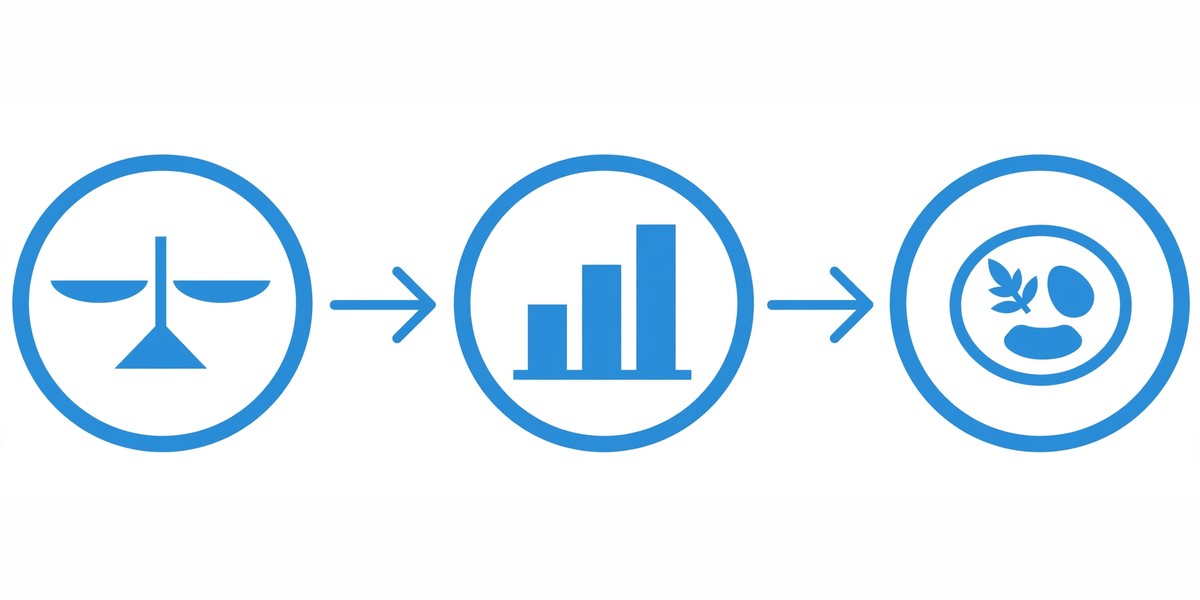
Your macros, short for macronutrients, are protein, carbohydrates, and fat. “Calculating your macros” means finding the number of grams of each one you should eat per day to reach your goal. The process has four parts: estimate the calories you burn (your BMR), adjust for activity (your TDEE), adjust for your goal, and split the final calorie number into grams.
You can skip the hand math and use our macro calculator to get your numbers in seconds, but understanding the steps helps you trust the results and adjust them later.
What Numbers Do You Need Before You Start?
Gather these six inputs. Each one feeds the formulas below:
- Age: metabolism slows slightly as you age
- Gender: the equations use different constants for men and women
- Weight: in kilograms or pounds (1 lb = 0.4536 kg)
- Height: in centimeters or feet and inches (1 in = 2.54 cm)
- Activity level: how much you move on a typical day
- Goal: lose fat, maintain weight, or build muscle
How Do You Calculate Your BMR?
BMR (basal metabolic rate) is the calories your body burns at complete rest. The most trusted formula is Mifflin-St Jeor:
- Men: (10 x weight in kg) + (6.25 x height in cm) – (5 x age) + 5
- Women: (10 x weight in kg) + (6.25 x height in cm) – (5 x age) – 161
Worked example: a 28 year old woman who weighs 65 kg and is 168 cm tall.
- 10 x 65 = 650
- 6.25 x 168 = 1,050
- 5 x 28 = 140
- 650 + 1,050 – 140 – 161 = 1,399 calories
Her body burns about 1,399 calories before she even gets out of bed. That is the foundation everything else builds on.
How Do You Find Your TDEE?
TDEE (total daily energy expenditure) adds your daily movement to your BMR. Multiply BMR by the activity factor that best describes you:
| Activity level | Multiplier |
|---|---|
| Sedentary (desk job, little exercise) | 1.2 |
| Lightly active (light exercise 1 to 3 days/week) | 1.375 |
| Moderately active (moderate exercise 3 to 5 days/week) | 1.55 |
| Very active (hard exercise 6 to 7 days/week) | 1.725 |
| Extra active (physical job plus training) | 1.9 |
Continuing the example: our 28 year old exercises moderately, so 1,399 x 1.55 = 2,168.45, which rounds to 2,168 calories per day. Be honest with this step. Most people pick one level too high, which inflates every number downstream.
How Do You Set Your Calorie Target?
Eating your exact TDEE keeps your weight stable. Adjust from there:
| Goal | Adjustment | Example (TDEE 2,168) |
|---|---|---|
| Lose fat | TDEE – 500 | 1,668 calories |
| Maintain weight | TDEE + 0 | 2,168 calories |
| Build muscle | TDEE + 300 | 2,468 calories |
A 500 calorie daily deficit leads to roughly one pound of fat loss per week, since a pound of fat stores about 3,500 calories. Never drop below 1,200 calories per day without medical supervision.
How Do You Convert Calories Into Macro Grams?
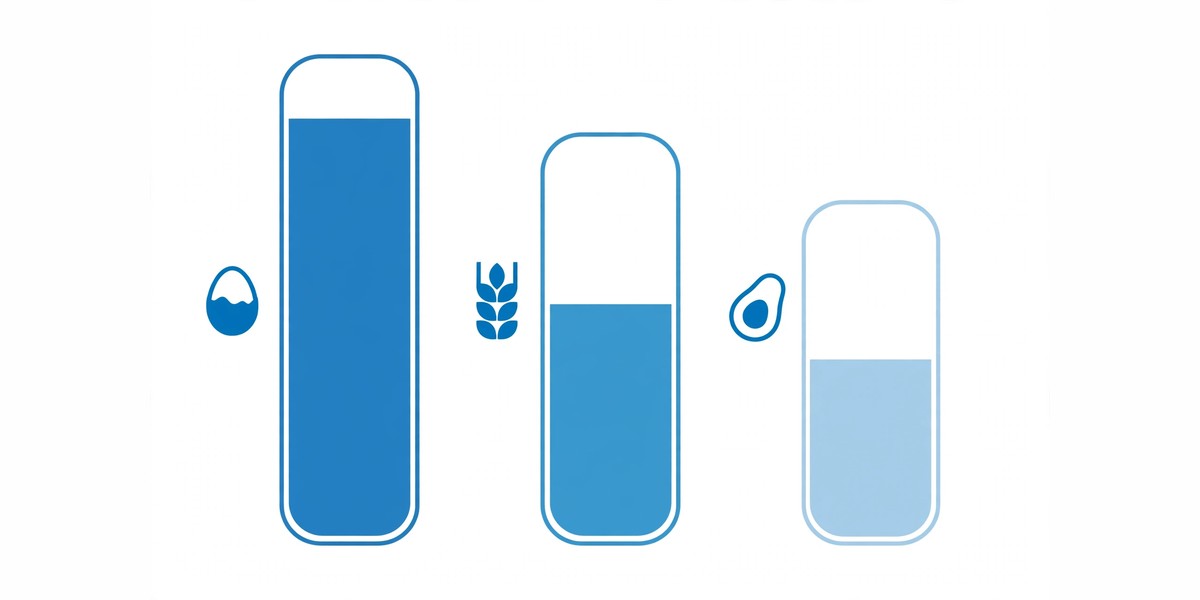
This is the step most guides skip. Use the Atwater factors: protein = 4 calories per gram, carbs = 4 calories per gram, fat = 9 calories per gram. Pick a percentage split, multiply your target calories by each percentage, then divide by the calories per gram.
Example: a 1,668 calorie fat-loss target with a High Protein split of 40% protein, 30% carbs, 30% fat.
- Protein: 1,668 x 0.40 = 667.2 calories, divided by 4 = 167 g
- Carbs: 1,668 x 0.30 = 500.4 calories, divided by 4 = 125 g
- Fat: 1,668 x 0.30 = 500.4 calories, divided by 9 = 56 g
Check the math: (167 x 4) + (125 x 4) + (56 x 9) = 668 + 500 + 504 = 1,672 calories, which matches the 1,668 target within rounding. Her daily targets are 167 g protein, 125 g carbs, and 56 g fat.
How Do You Pick the Right Macro Split?
| Split | Protein / Carbs / Fat | Best for |
|---|---|---|
| Balanced | 30 / 40 / 30 | Beginners and general health |
| High Protein | 40 / 30 / 30 | Fat loss and muscle building |
| Low Carb | 25 / 20 / 55 | People who prefer higher fat meals |
Beginners should start with Balanced. It provides enough protein to protect muscle (about 0.7 g per pound of body weight for most people) while keeping carbs high enough to fuel workouts. Switch to High Protein when fat loss stalls or training gets serious.
What Does a Day of Hitting Your Macros Look Like?
Targets only work if you can eat them. Here is how 167 g protein, 125 g carbs, and 56 g fat might look across four meals:
| Meal | Protein | Carbs | Fat |
|---|---|---|---|
| Breakfast: Greek yogurt, berries, granola | 30 g | 40 g | 12 g |
| Lunch: chicken breast, rice, vegetables, olive oil | 45 g | 45 g | 15 g |
| Snack: protein shake and banana | 30 g | 30 g | 4 g |
| Dinner: salmon, sweet potato, salad | 62 g | 10 g | 25 g |
| Daily total | 167 g | 125 g | 56 g |
Notice the protein is spread fairly evenly. Research shows 25 to 40 grams of protein per meal maximizes muscle protein synthesis, so front loading all your protein at dinner is less effective than spreading it out.
Frequently Asked Questions
Do I need to hit my macros exactly every day?
No. Aim to land within about 10% of each target and judge by weekly averages. One imperfect day does not erase a consistent week, and chasing gram perfect days usually leads to burnout.
Which macro should I prioritize if tracking feels overwhelming?
Protein first, calories second. Hit your protein target and stay near your calorie target, and let carbs and fat fall where they fall. Most of the body composition benefit comes from those two numbers.
How often should I recalculate my macros?
Recalculate after every 10 pounds of weight change, when your activity level shifts, or when your goal changes. Your TDEE shrinks as you get lighter, so old targets slowly become too generous.
Why do macro calculators ask for activity level?
Because the gap between BMR and TDEE is huge. A sedentary person and a very active person with identical stats can differ by 600 or more calories per day, which changes every gram target.
Is the Mifflin-St Jeor equation accurate?
It is the most accurate widely available BMR formula, typically within 10% of lab measured values for most people. Treat the result as a strong starting point, then adjust based on 2 to 3 weeks of real weight data.
Can I calculate macros without a food scale?
You can estimate with measuring cups and hand portions, but a cheap digital food scale (usually under 15 dollars) is the single biggest accuracy upgrade. Eyeballing portions routinely underestimates intake by 20 to 30%.