Selling on Grailed feels simple at first. You take a few photos, write a description, set a price, and wait for a buyer. The part that catches new sellers off guard happens after the sale, when the payout lands in their account and it is lower than expected.
That gap between the listed price and the final payout comes from two separate charges. Once you understand both of them, pricing your next item becomes a lot easier.
The Two Charges Every Seller Pays
Every completed sale on Grailed involves a commission fee and a payment processing fee. These are not the same thing, even though they get deducted at the same time and often get lumped together in casual conversation.
The commission is the cut Grailed keeps for running the marketplace, handling customer support, and offering buyer protection. The processing fee belongs to whichever payment provider handled the transaction, whether that is Stripe or PayPal. Grailed does not keep the processing fee for itself, it simply passes that cost along from the payment company.
Breaking Down The Commission
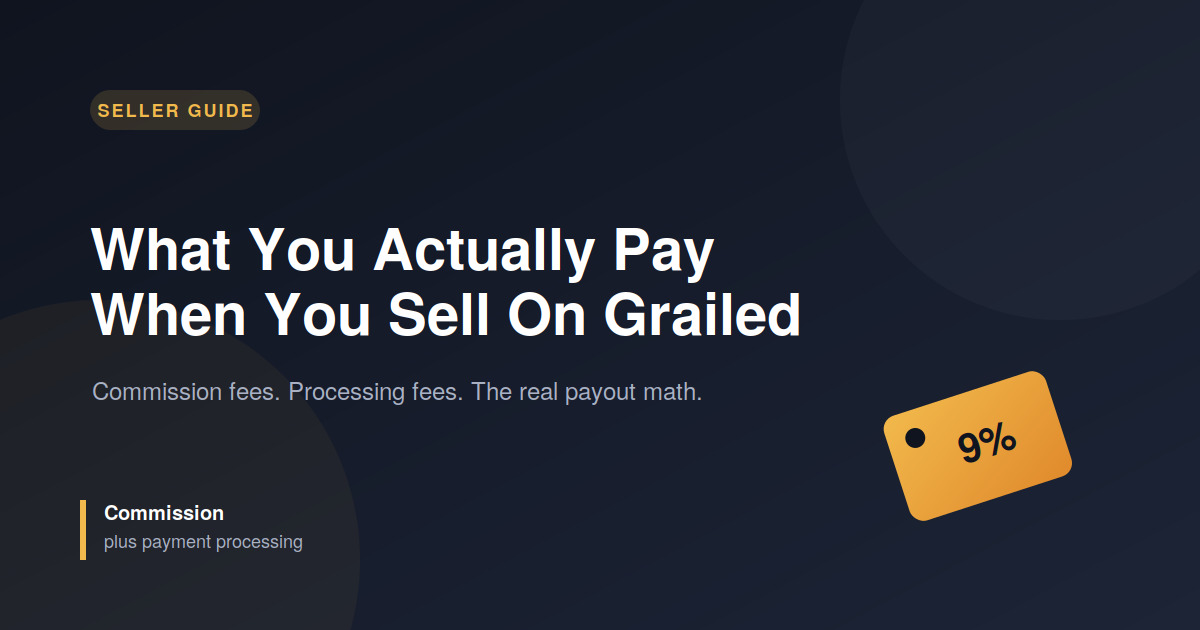
For most sales, Grailed applies a standard commission of 9 percent on the total transaction amount. This includes the item price plus any shipping the buyer pays, not just the price tag on the listing itself.
Smaller sales sometimes qualify for a reduced rate, which helps sellers moving lower priced accessories or basics avoid losing a large chunk of a small sale to fees. There is no separate charge for listing an item, and buyers never pay anything extra on their end.
This commission structure has stayed fairly steady in recent years. The rate moved up from an older 6 percent figure several years ago, and it has remained close to 9 percent since then, with only minor adjustments around lower priced tiers.
Breaking Down The Processing Fee
The second deduction comes from payment processing. This fee covers the cost of moving money securely between the buyer’s card or bank account and the seller’s payout.
Domestic transactions inside the same country typically carry a lower processing rate, often somewhere around 3.5 percent plus a small fixed charge of under a dollar. International transactions usually cost more to process, since currency conversion and cross border banking add extra steps, pushing that rate closer to 5 percent plus a similar fixed charge.
Sellers who still receive payments through PayPal sometimes see a slightly different rate, often close to 2.9 percent plus 30 cents. The exact number depends on the seller’s account setup and the payment method the buyer chooses at checkout.
A Real Example With Numbers
Numbers make this much easier to picture. Imagine selling a jacket for 120 dollars to a buyer in the same country, with no extra shipping charge added separately.
The commission takes 9 percent of 120 dollars, which equals 10.80 dollars. The processing fee adds roughly 3.5 percent plus a small fixed amount, landing close to 4.70 dollars. Combined, the seller loses around 15.50 dollars total, leaving a final payout near 104.50 dollars.
Now picture the same jacket sold to an international buyer instead. The commission stays the same at 10.80 dollars, but the processing fee climbs because international rates run higher, often closer to 6.50 dollars once the fixed charge is included. The total deduction grows to roughly 17.30 dollars, leaving a payout closer to 102.70 dollars.
That difference of less than two dollars on a single sale might not seem significant, but it adds up quickly across dozens of sales every month, especially for sellers who ship internationally on a regular basis.
Why This Number Matters Before You List
Many sellers price items based purely on what they think the market will pay, then feel disappointed when the payout arrives lower than expected. Flipping that approach tends to work better.
Decide on the amount you actually want to walk away with first. Then add the estimated commission and processing fee back on top of that number to land on a listing price that protects your margin from the start. This small shift in mindset prevents the frustration of feeling shortchanged after a sale closes.
It also helps to remember that shipping charges count toward the total used to calculate the commission. If you offer free shipping and build the cost into your item price, the entire amount becomes subject to the commission. If you charge shipping separately, that amount still factors into the fee total, since Grailed calculates the commission on the full transaction value either way.
Staying Profitable Sale After Sale
A few habits help sellers stay ahead of these deductions without feeling like every sale is a guessing game.
Check current rates occasionally, since payment processing percentages can shift slightly over time even when the core commission stays steady. Separate your gross sale price from your net payout mentally, so you are never surprised by the difference. Factor in whether a buyer is domestic or international before finalizing your price, especially on higher value items where the percentage gap becomes more noticeable in real dollars.
It also helps to keep a simple record of your recent sales alongside the fees deducted from each one. Over time, this record gives you a clearer picture of how much you are actually keeping per item category, whether that is denim, outerwear, sneakers, or accessories. Some sellers discover that certain categories carry slightly different effective rates once shipping costs and average international demand are factored in, even though the official percentage stays the same across the board.
Another habit worth building is reviewing your pricing every few months rather than setting it once and forgetting about it. Market demand for certain brands shifts, and a price that covered your fees comfortably six months ago might no longer leave the same margin if your costs or sourcing prices have changed in the meantime.
Selling On Grailed
Selling on Grailed remains one of the more straightforward ways to move designer and streetwear pieces, mainly because the fee structure does not change based on category or item type. Once you know exactly what gets deducted and why, every sale becomes predictable instead of stressful, and your pricing strategy can finally work in your favor instead of against you.