

Macronutrients are the three nutrients your body needs in large amounts: protein, carbohydrates, and fat. Protein builds and repairs tissue at 4 calories per gram, carbohydrates supply quick energy at 4 calories per gram, and fat supports hormones and vitamin absorption at 9 calories per gram. Together they provide nearly all the calories you eat.
Every diet debate you have ever heard, from keto to high carb to high protein, is really an argument about the ratio of these three nutrients. Understand what each one does and you can see through any nutrition headline in seconds. This guide covers all three, plus the honorary mentions: fiber, water, and alcohol.
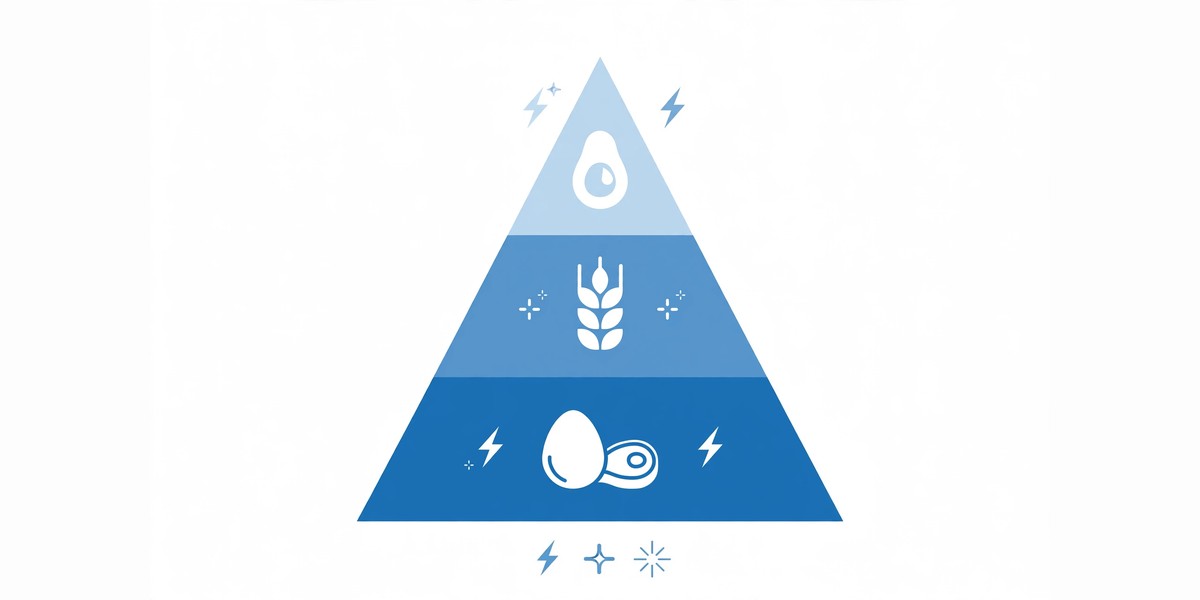
What Are the Three Macronutrients?
“Macro” means large: these are nutrients you eat in tens or hundreds of grams per day, unlike micronutrients (vitamins and minerals) measured in milligrams. Each macro has a distinct job, a distinct calorie density, and a distinct effect on hunger and health.
| Macronutrient | Calories per gram | Primary jobs |
|---|---|---|
| Protein | 4 | Builds muscle, enzymes, immune cells; most filling macro |
| Carbohydrates | 4 | Quick energy for brain and muscles; fiber feeds gut health |
| Fat | 9 | Hormone production, vitamin absorption, long term energy |
What Does Protein Do?
Protein is made of amino acids, including nine essential ones your body cannot make itself. Its headline jobs:
- Builds and repairs tissue: muscle, skin, hair, and organs are all constructed from protein.
- Preserves muscle in a deficit: dieting without enough protein costs you muscle along with fat.
- Controls hunger: protein triggers fullness hormones more strongly than carbs or fat.
- Burns calories digesting: 20 to 30% of protein calories are spent on digestion itself.
Good sources include meat, fish, eggs, dairy, legumes, tofu, and protein powder. Most active adults need 0.7 to 1.0 grams per pound of body weight daily. For a 160 pound person that is 112 to 160 grams, or 448 to 640 calories from protein.
What Do Carbohydrates Do?
Carbs are your body’s preferred fast fuel. Your brain alone burns about 120 grams of glucose per day, and high intensity exercise runs almost entirely on carbohydrate. Not all carbs behave the same:
- Simple carbs (sugar, white bread, candy): digest fast, spike blood sugar, satisfy briefly.
- Complex carbs (oats, rice, potatoes, beans): digest slower, provide steadier energy.
- Fiber (vegetables, fruits, legumes, whole grains): a carb your body cannot fully digest. It feeds gut bacteria, slows digestion, and improves fullness.
Carbs are not essential the way protein and fat are, your liver can manufacture glucose, but they make training, thinking, and mood noticeably better for most people. Athletes and very active people generally perform best with carbs at 40 to 55% of calories.
What Does Fat Do?
Fat is the most calorie dense macro at 9 calories per gram, which is why small amounts add up fast: one tablespoon of oil carries 120 calories. But fat is far from the enemy old diet advice made it:
- Builds hormones: testosterone, estrogen, and other hormones are synthesized from fat. Very low fat diets can disrupt them.
- Absorbs vitamins: vitamins A, D, E, and K are fat soluble and need dietary fat for absorption.
- Protects organs and nerves: fat cushions organs and insulates nerve cells.
- Provides lasting energy: fat digests slowly, which extends fullness between meals.
Fat types matter. Unsaturated fats (olive oil, nuts, avocados, fatty fish) support heart health. Saturated fats (butter, red meat, coconut oil) are fine in moderation. Trans fats (partially hydrogenated oils) are the one type worth avoiding almost entirely.
What About Fiber, Water, and Alcohol?
Three more substances deserve mention:
- Fiber is technically a carbohydrate, but it behaves like its own macro for health purposes. Target about 14 grams per 1,000 calories (28 g on a 2,000 calorie diet). Beans, lentils, oats, and vegetables are the best sources.
- Water is sometimes called the forgotten macronutrient because you need liters of it daily. Even 2% dehydration measurably hurts focus and workout performance.
- Alcohol provides 7 calories per gram but zero nutrition, disrupts sleep, and lowers food inhibitions. Budget it like a macro if you drink: those calories count.
How Much of Each Macro Do You Need?
The Institute of Medicine publishes Acceptable Macronutrient Distribution Ranges (AMDR), the percentage of calories each macro should supply:
| Macronutrient | AMDR (% of calories) | What 2,000 calories looks like |
|---|---|---|
| Protein | 10 – 35% | 50 – 175 g |
| Carbohydrates | 45 – 65% | 225 – 325 g |
| Fat | 20 – 35% | 44 – 78 g |
Verify one row: 10% of 2,000 calories is 200 calories, divided by 4 cal/g = 50 g protein; 35% is 700 calories / 4 = 175 g. For fat: 20% is 400 / 9 = 44 g; 35% is 700 / 9 = 78 g. Active people and dieters usually do best at the higher end of the protein range.
How Do You Turn This Into Daily Gram Targets?
Knowledge becomes results when it becomes numbers. The conversion takes four steps: estimate your BMR with the Mifflin-St Jeor equation, multiply by your activity level for TDEE, adjust for your goal (minus 500 to lose fat, plus 300 to gain muscle), then divide by your chosen split using 4, 4, and 9 calories per gram.
Example: a 2,400 calorie maintenance target on a Balanced split (30% protein, 40% carbs, 30% fat) becomes 180 g protein (2,400 x 0.30 / 4), 240 g carbs (2,400 x 0.40 / 4), and 80 g fat (2,400 x 0.30 / 9). Check: (180 x 4) + (240 x 4) + (80 x 9) = 720 + 960 + 720 = 2,400 exactly. Rather than doing this by hand, run your stats through our macro calculator to get personalized gram targets instantly.
Frequently Asked Questions
What is the difference between macros and calories?
Calories measure total energy; macros describe where that energy comes from. Two 2,000 calorie diets can produce very different bodies depending on the protein, carb, and fat mix.
Which macro is most important for weight loss?
Protein. A calorie deficit causes the loss, but high protein (0.8 to 1.0 g per pound of body weight) ensures the weight lost is fat rather than muscle.
Are carbs bad for you?
No. Carbs are your brain’s preferred fuel and your muscles’ best fuel for intense exercise. Problems come from excess total calories and from diets built on refined sugar, not from carbohydrates as a category.
How much fat should you eat per day?
Most adults do well with 20 to 35% of calories from fat. On a 2,000 calorie diet that is 44 to 78 grams. Dropping below about 0.3 grams per pound of body weight can disrupt hormones.
Do you need to count macros to be healthy?
No, but it helps to understand them. Many healthy people eat well without tracking by following simple patterns: protein at every meal, plenty of vegetables, whole food carbs, and sensible fat portions.
What are micronutrients then?
Micronutrients are vitamins and minerals, needed in tiny amounts but essential for energy metabolism, immunity, and bone health. A varied diet rich in vegetables, fruits, and whole foods usually covers them; macros and micros work as a team.