
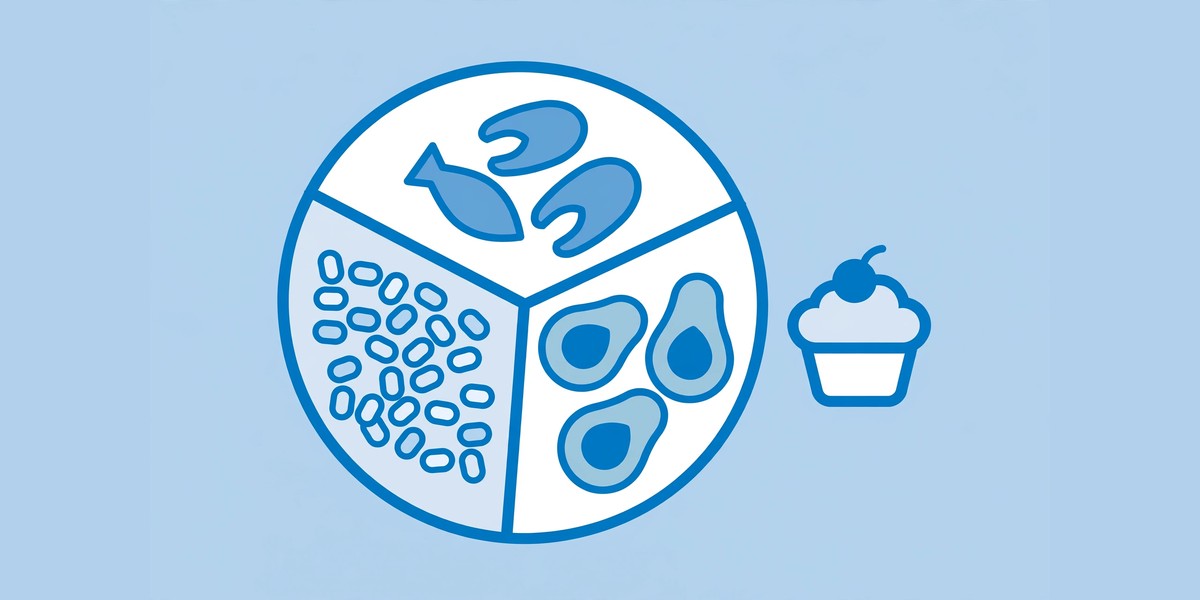
IIFYM (If It Fits Your Macros) is a flexible diet where you eat any foods you like as long as they fit your daily macro targets and calorie goal. Instead of banning food groups, you budget them: pizza fits if your macros allow it.
IIFYM sits between rigid meal plans and intuitive eating. It gives you the precision of tracking with the freedom to eat like a normal person at birthdays, restaurants, and holidays. Here is how it works, who it suits, and how to start without the common beginner mistakes.

What Does IIFYM Stand For?
IIFYM stands for “If It Fits Your Macros.” The name comes from bodybuilding forums in the early 2000s, where lifters answering diet questions would reply that any food was fine if it fits your macros. The idea spread because it solved the biggest problem with traditional diets: they fail the moment real life shows up with cake.
The core claim is simple and well supported: for body composition, hitting your calorie and macro targets matters far more than which specific foods supply them. A diet of 2,000 calories with 150 grams of protein produces similar fat loss whether the carbs come from rice or from a donut, because your body processes the underlying nutrients the same way.
How Does IIFYM Work?
You calculate your daily targets once, then spend them like a budget across the day. Example targets for a moderately active adult losing fat: 2,000 calories, 150 g protein, 200 g carbs, 67 g fat. Verify the math: (150 x 4) + (200 x 4) + (67 x 9) = 600 + 800 + 603 = 2,003 calories, matching the target within rounding.
With those targets, your day could include:
- Breakfast: protein pancakes with syrup (35 g protein, 60 g carbs, 10 g fat)
- Lunch: chicken burrito bowl (45 g protein, 55 g carbs, 15 g fat)
- Pre workout: banana and whey shake (30 g protein, 35 g carbs, 3 g fat)
- Dinner: two slices of pizza plus a side salad (40 g protein, 50 g carbs, 39 g fat)
Daily total: 150 g protein, 200 g carbs, 67 g fat. Pizza fits because it was budgeted, not because pizza is a health food. To find your own numbers, use our macro calculator and pick the split that matches your goal.
What Is the Difference Between IIFYM and Clean Eating?
| IIFYM | Strict clean eating | |
|---|---|---|
| Food rules | Any food allowed within macro budget | Only whole, unprocessed foods |
| Flexibility | High: restaurants and treats fit easily | Low: social eating is difficult |
| What drives results | Calories and macros | Food quality by exclusion |
| Main risk | Neglecting micronutrients and fiber | Burnout and binge cycles |
| Best for | Long term adherence | Short resets and habit building |
The honest answer is that the best approach borrows from both: aim for 80 to 90% of your food from whole, nutritious sources, and spend the remaining 10 to 20% of your macro budget on foods you simply enjoy. That hybrid keeps both your health and your sanity.
What Are the Pros of IIFYM?
- No banned foods means no forbidden fruit effect and fewer binge episodes.
- Social freedom: restaurant menus become math problems instead of minefields.
- Built in portion education: weighing a “small” bowl of cereal once teaches more than a year of guessing.
- Goal precision: protein targets protect muscle during fat loss in a way vague “eat healthy” advice cannot.
- Sustainability: people stick with flexible plans far longer than rigid ones, and adherence beats perfection.
What Are the Cons of IIFYM?
- Micronutrient gaps: hitting macros with junk food can leave you short on fiber, vitamins, and minerals. Fiber deserves its own mini target: about 14 grams per 1,000 calories.
- Tracking burden: weighing and logging every meal takes 10 to 15 minutes a day at first.
- False precision: food labels can legally be off by up to 20%, so gram perfect days are an illusion. Weekly averages are what count.
- Not ideal for everyone: people with a history of disordered eating often do better with simpler structure like plate portions.
How Do You Start IIFYM in 5 Steps?
- Calculate your targets. Get your BMR, multiply by your activity level, adjust for your goal, and split into grams using 4/4/9 calories per gram.
- Pick your split. Beginners do well on Balanced (30% protein, 40% carbs, 30% fat). Shift toward High Protein (40/30/30) when training hard or dieting.
- Pre log tomorrow today. Enter planned meals the night before. Five minutes of planning beats an hour of damage control.
- Follow the 80/20 rule. Build most meals from whole foods, then fit treats into the remaining budget guilt free.
- Review weekly, not daily. Compare average weight and average intake across each week, and adjust targets only after 2 to 3 weeks of data.
What Does a Sample IIFYM Day Look Like?
A full day at 2,200 calories with 165 g protein, 220 g carbs, and 73 g fat (verify: 660 + 880 + 657 = 2,197):
| Meal | Food | P / C / F |
|---|---|---|
| Breakfast | Oatmeal with whey, berries, peanut butter | 38 / 65 / 16 |
| Lunch | Turkey sandwich, apple, Greek yogurt | 45 / 60 / 12 |
| Snack | Protein bar and banana | 25 / 45 / 8 |
| Dinner | Beef stir fry with rice | 42 / 40 / 22 |
| Dessert | Ice cream, one measured cup | 15 / 10 / 15 |
| Total | 165 / 220 / 73 |
Check the column sums: protein 38 + 45 + 25 + 42 + 15 = 165; carbs 65 + 60 + 45 + 40 + 10 = 220; fat 16 + 12 + 8 + 22 + 15 = 73. Ice cream every night is not required, but the point stands: planned treats do not break a diet, unplanned ones do.
Frequently Asked Questions
Is IIFYM healthy if you eat junk food?
IIFYM controls calories and macros, not food quality. Eating to your macros with mostly whole foods is healthy; hitting them with only junk food risks fiber and micronutrient deficiencies. Aim for 80% nutritious foods.
Can you lose weight with IIFYM?
Yes, and it is one of the most reliable ways. Weight loss comes from the calorie deficit, muscle retention comes from the protein target, and the flexibility keeps you consistent long enough for both to work.
Do you have to track forever on IIFYM?
No. Most people track strictly for 3 to 6 months, then transition to loose tracking a few days per week. The portion awareness you build is permanent.
What is the difference between IIFYM and flexible dieting?
They are the same thing. Flexible dieting is the general name; IIFYM is the slogan the online fitness community gave it. Both mean hitting macro targets without food bans.
How much fiber should I eat on IIFYM?
Aim for about 14 grams of fiber per 1,000 calories, so roughly 28 grams on a 2,000 calorie diet. Fiber keeps digestion smooth and hunger low, and it is the nutrient most often missing from treat heavy IIFYM days.
Can beginners do IIFYM?
Yes, with one tip: spend the first two weeks eating mostly familiar whole food meals while you learn the tracking app. Add flexible treats in week three once logging feels routine instead of overwhelming.