Quick Answer
To measure paint correctly for acrylic pouring: use the formula canvas area × 0.1 for ounces, mix each color at a 2:1 pouring medium to paint ratio, test consistency before pouring (should flow like warm honey), and always prepare 20% more than your estimate. Measurement precision is the single biggest factor separating inconsistent pours from reliable, repeatable results.
Why Measuring Paint Correctly Changes Everything
Most acrylic pouring guides focus heavily on techniques — Dutch pour, dirty pour, ring pour. But the technique only works when your paint is measured and mixed correctly in the first place. Inconsistent measurements are the leading cause of failed pours, even among experienced artists.
This guide focuses on the measurement side of acrylic pouring: how to use a paint calculator for acrylic pouring, how to mix each color precisely, and how to build a measurement system that makes every future pour more predictable.
The Complete Measurement System for Acrylic Pouring
Part 1: Calculate Your Total Paint Volume
Before mixing a single color, establish how much total paint your project needs using the acrylic pouring paint calculator formula:
Total Volume (oz) = Canvas Length (in) × Canvas Width (in) × 0.1
This is your baseline. From here, adjust based on:
- Technique: add 15–20% for flip cup or dirty pour
- Surface: add 20–25% for unprimed canvas
- Buffer: always add 15–20% to your final adjusted number
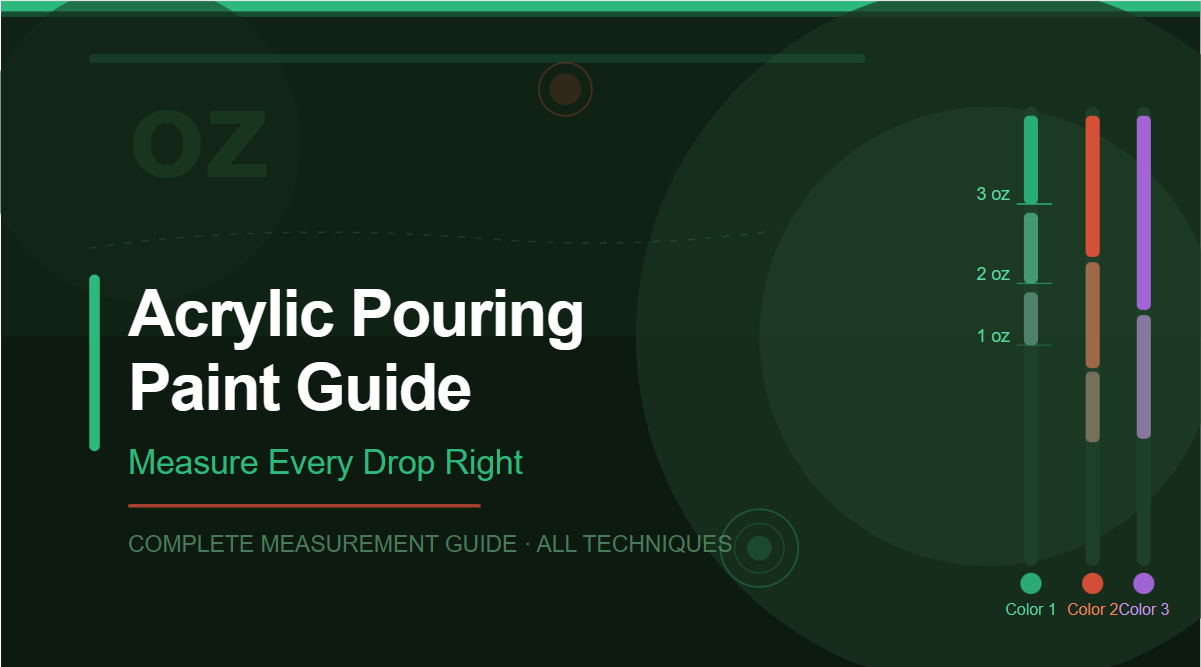
Part 2: Divide Volume Across Colors
Once you have your total, allocate paint to each color. Two approaches:
Equal division: Divide total by number of colors. Simple and effective for beginners.
Weighted division: Assign 30–40% to dominant colors, 10–15% to accents. Better for intentional designs.
Part 3: Mix Each Color
For each color cup, mix paint with pouring medium at your chosen ratio. The most common ratios:
| Medium Type | Ratio (Medium:Paint) | Consistency | Best For |
| Floetrol | 2:1 | Medium-thin | General pouring, cells |
| Liquitex PM | 1.5:1 | Medium | Controlled pours |
| GAC 800 | 3:1 | Thin | Natural cells without silicone |
| Water + Glue | 1:1:0.5 | Variable | Budget pouring |
| Acrylic PM | 2:1 | Medium | Most techniques |
How to Use an Acrylic Paint Pouring Reference Guide
A reference guide for acrylic paint pouring measurements works like a lookup table. You record your canvas size, select your technique, apply the formula, and read off your per-color amounts. Here is how to build your own:
- Record canvas size for every project
- Write down the technique used
- Note total paint prepared and amount left over
- Rate the coverage result (too thin, good, excessive)
- After 5 pours, you will have a highly personalized reference more reliable than any generic acrylic pouring paint calculator
Measuring Paint Without Digital Tools
While a digital kitchen scale is ideal, many artists measure by volume using standard kitchen tools:
| Measurement | Equivalent |
| 1 fluid oz | 2 tablespoons / 30 ml |
| 0.5 oz | 1 tablespoon / 15 ml |
| 0.25 oz | 1.5 teaspoons / 7.5 ml |
| 1 cup | 8 oz / 240 ml |
| Shot glass | 1.5 oz / 44 ml |
For consistent results across sessions, using weight (grams) is superior to volume measurement because paint density varies by brand and pigment load. A scale costing under $15 is one of the highest-value tools in your acrylic pouring kit.
Common Measurement Mistakes and How to Fix Them
Mistake 1: Not Accounting for Pouring Medium in Volume
Many beginners calculate how much paint they need for acrylic pouring and forget that the pouring medium multiplies the total volume significantly. A cup with 1 oz of paint and 2 oz of medium totals 3 oz — always think in total volume, not just paint volume.
Mistake 2: Measuring by Eye
Eyeballing paint amounts leads to inconsistent color distribution and unexpected results. Even experienced artists who pour often have off results when they skip measuring. Build the habit of measuring every single session.
Mistake 3: Skipping the Buffer
Running out of paint mid-pour is one of the most frustrating experiences in fluid art. A 20% buffer adds minimal cost but eliminates the problem entirely. Always prepare more than you think you need.
Mistake 4: Ignoring Consistency Checks
Two batches mixed at the same ratio can have different consistencies if paint brands differ. Always do a drip test before pouring: dip a stir stick in the paint, lift it, and watch it drip. It should flow smoothly and continuously like warm honey — not in globs, not like water.
Mistake 5: Using the Same Estimate for Every Canvas
Artists who pour regularly often use a mental estimate without recalculating. This works for the same canvas size with the same technique but breaks down immediately when switching sizes or methods. Always recalculate when the project changes.
Measuring for Specific Techniques: A Practical Guide
Dirty Pour and Flip Cup
These techniques require all colors to be loaded into a single cup, which is then poured or flipped onto the canvas. Measurement precision here is critical because once the colors are combined in the cup, you cannot adjust individual amounts.
Prepare each color separately, measure exactly, then layer them into the pour cup in the order you want them to appear. The last color you add is typically the first that touches the canvas.
Dutch Pour
Dutch pour uses a hair dryer or straw to move paint across the canvas with air. Because air spreads paint thinner, you can use 5–10% less total volume than other techniques. However, the paint must be slightly thinner in consistency so air moves it easily.
Tree Ring Pour
Tree ring technique requires very precise per-color measurement because each ring of color needs equal volume to maintain the concentric pattern. Measure each color in identical amounts and pour in slow, controlled circles from the center outward.
Swipe Technique
Swiping requires a base layer poured across the canvas plus a secondary color on top. Measure approximately 60% of your total for the base layer and 40% for the swipe color. The swipe color needs slightly thicker consistency to sit on top of the base before swiping.
Building Your Personal Acrylic Pouring Paint Reference
The most valuable measurement tool you can create is your own pour journal. After every project, record:
- Canvas size and whether it was primed
- Technique used
- Total paint prepared (with breakdown by color)
- Pouring medium type and ratio used
- Weather conditions (temperature and humidity affect flow)
- Amount of paint left over after the pour
- Coverage quality rating (1–5 scale)
After 10 to 15 sessions of recording this data, you will have a personal acrylic pouring paint guide that reflects exactly your materials, your ratios, and your technique. No generic formula can replicate that level of personalization.
Paint Measurement by Project Scale
Small Projects (Under 8×10 inches)
Small canvases are the most forgiving for beginners learning to estimate. Prepare a base of 8–10 oz total for most small formats. The 0.1 multiplier may slightly overestimate on very small canvases under 6×6 — use 0.12 for those for better results.
Medium Projects (12×12 to 16×20 inches)
Medium canvases are the standard for most acrylic pour artists. The base formula works reliably in this range. Always add the 20% buffer and measure by weight for best consistency.
Large Projects (18×24 and Above)
Large canvases amplify every measurement error. A slight under-estimate that causes a thin patch on a small canvas causes a large bare zone on a 24×36. Increase your buffer to 25–30% for canvases 18×24 and larger. Prepare all colors in advance and have them ready before the first drop hits the canvas.
Frequently Asked Questions
What is the most accurate way to measure paint for acrylic pouring?
A digital kitchen scale measuring in grams is the most accurate method. It accounts for density differences between paint brands and allows you to record and reproduce exact ratios across sessions.
How do I know if my paint consistency is right for pouring?
Dip a stir stick into your mixed paint and lift it. The paint should flow off in a smooth, continuous stream — similar to warm honey or syrup. If it drips in globs, thin it slightly. If it runs off too fast like water, thicken with more paint.
How much paint do I need for acrylic pouring on a 16×20 canvas?
Using the standard formula: 16 × 20 × 0.1 = 32 oz base. Add a 20% buffer to prepare approximately 38–40 oz total. For flip cup technique, prepare 36–40 oz.
Should I measure pouring medium separately?
Yes. Always think of your paint volume and medium volume as separate components that combine into your total cup volume. Track both separately in your pour journal to maintain consistent ratios across sessions.
Can I reuse leftover acrylic pouring paint?
You can store leftover unmixed paint in airtight containers for 1–2 weeks. Mixed paint (with pouring medium already added) has a shorter shelf life of 2–5 days. Label containers with the color, ratio, and date mixed.
Key Takeaways
- Use canvas area × 0.1 as your base measurement — this is your acrylic pouring paint guide starting point
- Adjust for technique, surface type, and consistency before finalizing your estimate
- Always prepare 15–20% more paint than your estimate — 25–30% for large canvases
- Use a digital scale for the most accurate and reproducible measurements
- Build a personal pour journal — it becomes more accurate than any formula after 10 projects
- Test consistency before every pour: warm honey flow is your target