
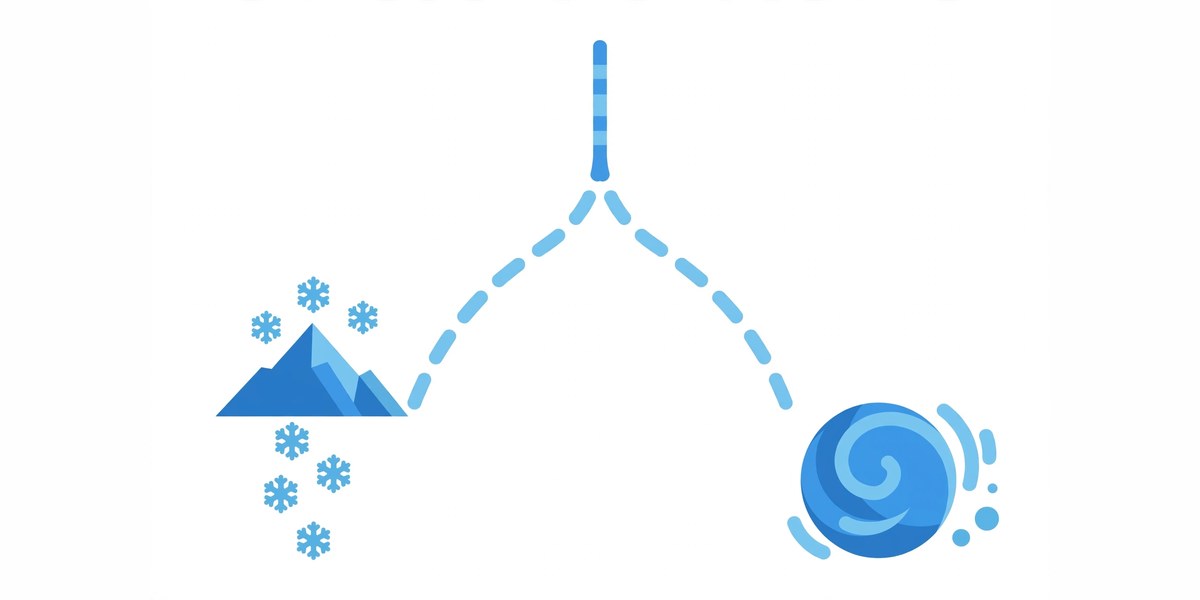
Direct answer: The debt avalanche method is better mathematically: it targets the highest APR first, so you pay the least interest and finish fastest. The debt snowball method targets the smallest balance first, giving faster early wins that help some people stay motivated. In a verified $9,200 example, avalanche saved $509.81 in interest and finished two months sooner.
What Is the Debt Avalanche Method?
The avalanche method ranks your debts by interest rate, highest first. You pay minimums on every debt, then send all extra money to the debt with the highest APR. When that debt is gone, you roll its payment into the next-highest APR debt. Because expensive debt gets killed first, total interest is always minimized.
What Is the Debt Snowball Method?
The snowball method ranks your debts by balance, smallest first. You pay minimums everywhere, then aim extra money at the smallest balance. When it is cleared, you roll that payment into the next-smallest debt. You may pay more interest, but you clear a whole debt faster, which gives a psychological boost.
How Do Avalanche and Snowball Compare in Real Dollars?
Opinions are cheap, so here is a verified side-by-side. Three debts totaling $9,200: a $5,200 travel rewards card at 24.99% APR ($130 minimum), a $2,800 retail store card at 19.99% APR ($70 minimum), and a $1,200 personal line of credit at 12.99% APR ($40 minimum), with a $300 extra payment each month.
| Avalanche | Snowball | |
|---|---|---|
| Payoff order | Travel card, store card, line of credit | Line of credit, store card, travel card |
| Months to debt-free | 23 | 25 |
| Total interest | $1,849.65 | $2,359.46 |
| Total paid | $11,049.65 | $11,559.46 |
Avalanche clears the travel card in month 15, the store card in month 22, and the line of credit in month 23. Snowball clears the line of credit in month 4, the store card in month 12, and the travel card in month 25. The snowball follower sees a fully cleared debt 11 months sooner, but pays $509.81 more for it.
When Should You Choose the Snowball Method?
Choose snowball when motivation is your weak point. Research on consumer behavior consistently shows that people who experience an early win are more likely to stick with a payoff plan. If you have quit payoff plans before, the quick win of clearing a $1,200 balance in four months may be worth the extra interest.
Snowball also simplifies your life faster. Every cleared debt is one fewer minimum payment to track and one fewer account that can charge a late fee. For someone juggling five or six small store cards, that simplicity has real value.
When Is Avalanche the Clear Winner?
Avalanche wins on pure dollars every time the APRs differ. The bigger the rate gap, the bigger the savings. In the example above, the gap between 24.99% and 12.99% produced $509.81 in savings on just $9,200 of debt. On $25,000 of credit card debt, the same rate gap can easily save several thousand dollars.
Avalanche also wins when balances are similar, because then the payoff order is nearly identical to snowball and you lose nothing by picking the cheaper route.
Can You Combine Both Methods?
Yes, and many people do. A common hybrid: use snowball for any debt under $1,000 to grab a quick win, then switch to avalanche for the rest. You get the early momentum and most of the interest savings. Another hybrid: follow avalanche, but make one exception for a tiny high-stress debt, like money owed to a family member.
How to Start Your Payoff Plan in 5 Steps
- List every debt with its balance, APR, and minimum payment. Do not skip store cards or medical bills.
- Run both methods in a debt payoff calculator to see your exact interest difference and debt-free dates.
- Pick your method based on the numbers and your honest assessment of your motivation.
- Automate minimums on all debts so nothing is ever late, then automate the extra payment toward your priority debt.
- Re-run quarterly. If rates or balances change, recalculate. A 0% balance transfer offer, for example, reshuffles the avalanche order.
How to Decide in 60 Seconds
Ask yourself two questions. First, look at your rate gap: if your highest APR is at least 5 points above your lowest, avalanche savings are large enough to matter, and you should lean avalanche. Second, be honest about your track record: if you have started payoff plans before and quit within three months, the early win of snowball is worth more than the interest savings.
If you answer “big gap, strong discipline,” pick avalanche. If you answer “small gap, shaky follow-through,” pick snowball. If the answers conflict, run the hybrid: clear anything under $1,000 first, then switch to avalanche. The worst choice is spending another month deciding while interest accrues.
Frequently Asked Questions
Which is better, debt snowball or avalanche?
Avalanche is better for saving money: it minimizes interest and payoff time. Snowball is better for motivation: it clears the first debt fastest. In a verified $9,200 example, avalanche saved $509.81 and finished two months earlier.
Does Dave Ramsey recommend snowball or avalanche?
Dave Ramsey recommends the debt snowball method, arguing that personal finance is mostly behavioral and quick wins keep people motivated. Mathematicians and financial planners generally prefer avalanche for its lower cost.
How much more does snowball cost than avalanche?
It depends on your balances and rate gaps. In our verified example with $9,200 of debt and a $300 extra payment, snowball cost $509.81 more in interest and took two extra months.
Should I pay off the smallest debt or highest interest first?
Pay the highest interest first if you want the lowest total cost. Pay the smallest balance first if you need an early win to stay on track. Either choice beats paying only minimums.
Can I switch methods halfway through?
Yes. Nothing locks you in. Many people start with snowball for momentum, then switch to avalanche once the small debts are gone. Recalculate your plan when you switch.
Do these methods work for student loans and car loans?
Yes. Avalanche and snowball work for any debt with a fixed rate and minimum payment, including student loans, auto loans, and personal loans. Just include every debt in one ranked list.