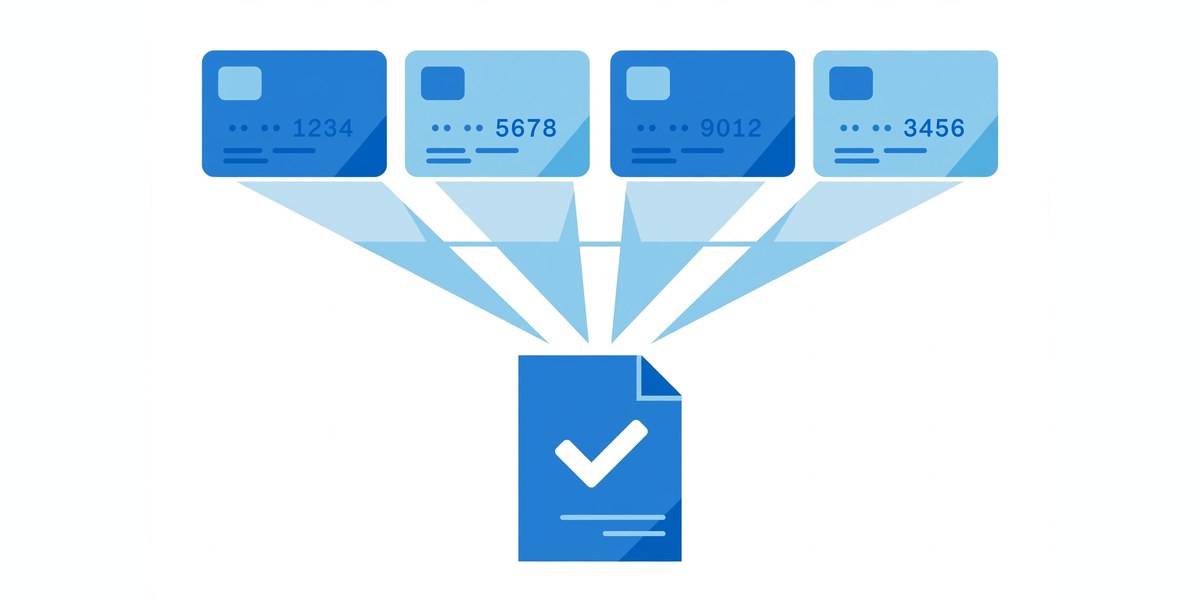
Direct answer: A debt consolidation loan is a personal loan that pays off multiple debts at once, leaving you with one fixed monthly payment, one interest rate, and one payoff date. It works when the loan APR is clearly lower than your current rates. On $15,000 over three years, swapping 22.36% card APR for an 11.90% loan saves about $2,814 in interest.
What Is a Debt Consolidation Loan?
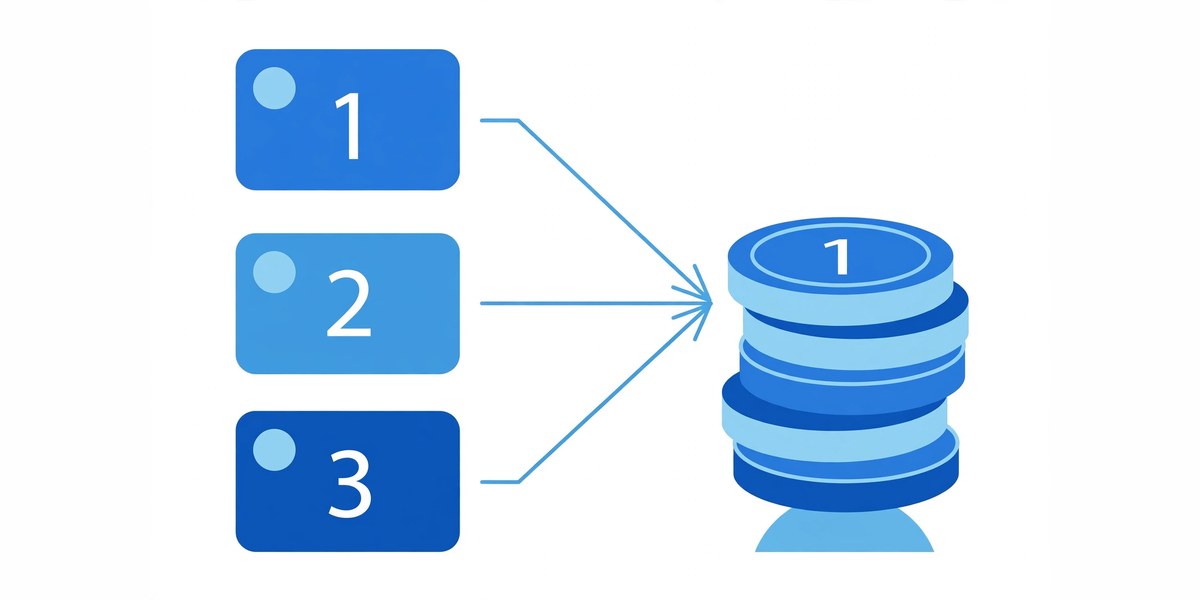
You borrow one lump sum from a bank, credit union, or online lender and immediately use it to pay off your credit cards or other high-rate debts. The old accounts go to zero, and you repay the new loan in equal monthly installments over a fixed term, usually two to seven years. Unlike revolving credit cards, the balance cannot grow back up on its own.
Most consolidation loans are unsecured, meaning no collateral is required, and most carry fixed rates, so your payment never changes. Some lenders even send the payoff funds directly to your creditors.
How Does the Math Work? A Verified Example
Take $15,000 of credit card debt. The average US credit card APR is about 22.36%, while the average bank personal loan is about 11.90%, per Federal Reserve data. Repaying over 36 months at each rate:
| Credit cards at 22.36% | Consolidation loan at 11.90% | |
|---|---|---|
| Monthly payment | $575.65 | $497.50 |
| Total interest | $5,723.55 | $2,909.95 |
| Total paid | $20,723.55 | $17,909.95 |
The loan cuts the monthly payment by $78.16 and saves $2,813.60 in interest. That is the entire case for consolidation in one table: same debt, same three years, nearly three thousand dollars cheaper. Check your own scenario with a debt payoff calculator before you apply.
What Are the Pros and Cons?
Pros:
- Lower interest cost when the loan APR beats your card rates, often by 8 to 12 percentage points.
- One payment, one date. A single autopay replaces several minimums, which cuts the risk of a missed payment and a late fee.
- Fixed finish line. A 36-month term means you are debt-free in 36 months. Credit card minimums have no end date.
- Credit score upside. Paying cards to zero drops your utilization ratio, which can lift your score within a billing cycle or two.
Cons:
- Origination fees. Many lenders charge 1 to 8% up front. A 5% fee on $15,000 is $750 added to the loan.
- Longer terms can cost more. A lower rate over seven years can still cost more total interest than a higher rate over three. Compare total interest, not just the monthly payment.
- You can re-borrow. Nothing stops you from running the paid-off cards back up, which is how people end up owing both the loan and new card debt.
- Approval is not guaranteed. The best rates go to borrowers with good credit and stable income. With poor credit, the offered rate may barely beat your cards.
When Does Consolidation Make Sense?
Consolidation makes sense when three conditions hold: the loan APR is at least a few points below your weighted card APR, the monthly payment fits your budget with room to spare, and you will not add new card debt. It is ideal for someone with steady income, decent credit, and $5,000 to $40,000 spread across several high-rate cards.
It makes less sense for small balances you could clear in a few months anyway, since fees can eat the savings, or when the real problem is overspending rather than interest rates. A loan treats the symptom; a budget treats the cause.
How to Get a Debt Consolidation Loan in 6 Steps
- List your debts with balances and APRs, and compute your weighted average rate so you know the number to beat.
- Check your credit score. Scores above 670 unlock the best rates; below 580, expect high rates or a secured-loan requirement.
- Prequalify with multiple lenders. Banks, credit unions, and online lenders offer soft-pull prequalification that does not hurt your score. Compare APR, origination fee, and term together.
- Pick the shortest term you can afford. A three-year loan at 11.90% beats a five-year loan at 10.99% on total interest for most balances.
- Pay off the cards immediately when the loan funds, ideally with the lender sending payments directly to creditors.
- Freeze the cards. Keep the oldest account open for credit history, but remove cards from wallets and online checkouts until the loan is repaid.
What Are the Alternatives to a Consolidation Loan?
A 0% balance transfer card is the cheapest alternative when your balance is small enough to clear within the 12 to 21 month promo window. You pay a 3 to 5% transfer fee but zero interest during the promo, which beats any loan rate. The risk is the promo expiring with a balance remaining.
A debt management plan through a nonprofit credit counseling agency is another route. The agency negotiates lower rates with your creditors, often down to 6 to 9%, and you make one monthly payment to the agency for three to five years. There is usually a small monthly fee, but no new loan is required.
Finally, the pure avalanche method with aggressive fixed payments needs no application at all. For disciplined borrowers with smaller balances, simply paying $400 instead of $130 on a $5,200 card clears it in 16 months with $927.77 in interest, which rivals consolidation savings without any fees or credit checks.
Frequently Asked Questions
How does a debt consolidation loan work?
You take out one personal loan, use it to pay off multiple high-interest debts, then repay the loan in fixed monthly installments. One payment replaces many, usually at a lower rate and with a fixed payoff date.
How much can a consolidation loan save?
On $15,000 over three years, moving from 22.36% card APR to an 11.90% loan saves about $2,814 in interest and lowers the payment by about $78 per month. Savings grow with larger balances and bigger rate gaps.
Does debt consolidation hurt your credit score?
The application causes a small hard-inquiry dip, but paying cards to zero usually raises your score soon after by lowering utilization. Making every loan payment on time then builds positive history.
What credit score do I need for a consolidation loan?
Most lenders want at least 580 to 620 for approval, with the best rates reserved for scores above 670. Credit unions are often more flexible than big banks for borderline scores.
Is a balance transfer card better than a consolidation loan?
A 0% balance transfer is cheaper if you can clear the balance within the 12 to 21 month promo window. A consolidation loan is better for larger balances that need three to five years, since its fixed rate beats the post-promo card rate.
What fees should I watch for?
Origination fees of 1 to 8% are the main one, plus late fees and any prepayment penalty (rare, but check). Always compare the loan’s total cost, including fees, against your current payoff plan.